


Artificial Grass, Synthetic Turf, or AstroTurf: What's the Difference?
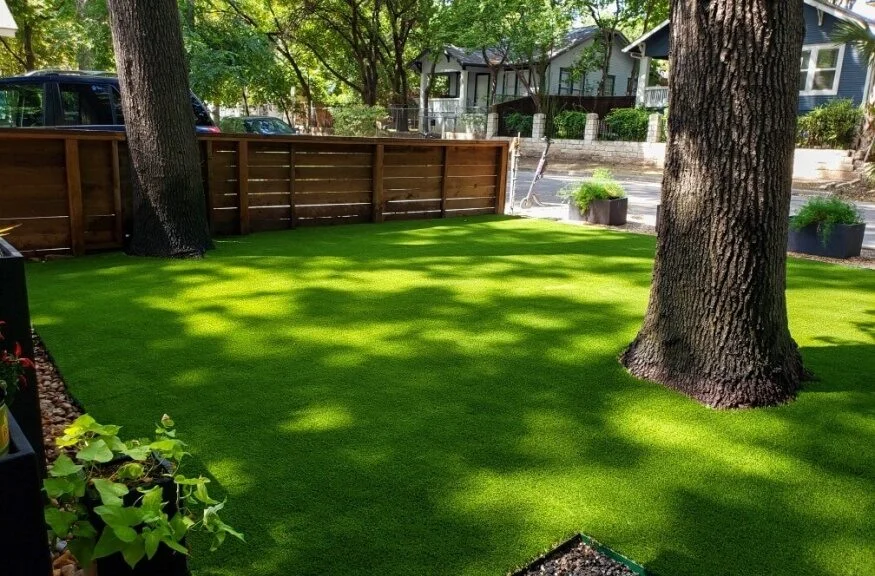
Artificial grass, synthetic turf, fake grass, and artificial turf all describe the same thing: a surface of synthetic fibers made to look and perform like a natural lawn. AstroTurf is different. It is a brand name, not a product category, and it became the word many people use for any fake grass.
When you are shopping for a yard in Austin, the name on the quote matters far less than how the turf is built and installed. This guide sorts out the terms so you can compare apples to apples.
Key Takeaways
- Artificial grass, synthetic turf, fake grass, and artificial turf are interchangeable names for the same type of product.
- AstroTurf is a trademarked brand that became a generic nickname, the same way people say Kleenex for tissue.
- Installers in the landscaping world tend to say “artificial grass” for yards and “turf” for sports fields and putting greens.
- The questions that actually separate one product from another are fiber type, pile height, infill, and drainage, not the name.
Why One Product Has So Many Names
Each name grew out of a different corner of the industry.
Artificial turf and synthetic turf come from sports. Stadiums and athletic fields were the first big customers, and “turf” is the word groundskeepers already used for a playing surface.
Artificial grass is the term that took over once homeowners started replacing lawns. It describes what the product replaces, which is how most people search for it.
Fake grass is the plain-English version. It is how a lot of people describe the product out loud, and plenty of folks type it into Google that way too.
None of these names point to a better or worse product. A company that says “synthetic turf” and a company that says “artificial grass” may be quoting you the exact same roll.
Where “AstroTurf” Comes From
AstroTurf is the brand name of one of the earliest synthetic playing surfaces. It got its name after being installed in the Houston Astrodome in the 1960s, and the name stuck so well that people still use it for any fake grass.
The early product was a short, stiff nylon carpet built for stadiums. It had very little in common with the soft, multi-tone residential grass sold today. If someone tells you they do not want “AstroTurf” in their backyard, they are usually picturing that old stadium carpet, and modern landscape grass looks and feels very different. Our post on whether fake grass can look real shows how far it has come.
What Actually Separates One Turf From Another
Since the names do not tell you much, here is what to compare when you look at products:
Fiber material and shape. Residential grass is typically made from polyethylene for softness, sometimes blended with a stiffer fiber that helps blades stand back up. Blade shape affects how the turf reflects light and how natural it looks.
Pile height. Taller fibers read as a lush lawn. Shorter fibers hold up better to heavy foot traffic and are standard for putting greens.
Infill. Infill is the material brushed down between the fibers to keep them upright, add weight, and help with cooling and odor control. Our guide to infill for artificial grass covers the options.
Drainage and base. What sits under the turf matters as much as the turf itself. A properly graded and compacted base is what keeps a yard from puddling after a Central Texas downpour.
Purpose. A dog run, a playground, a putting green, and a front yard each call for a different build. That is why we offer pet-friendly turf, playground turf, and putting green turf as separate products instead of one roll for everything.
You can browse what we carry on our artificial grass products page.
Which Term Should You Search For?
Use whichever word comes naturally. If you are looking for a residential lawn in Austin, Round Rock, Georgetown, or anywhere else in Central Texas, “artificial grass installation” will turn up landscape installers. “Synthetic turf” leans toward sports and commercial results, and “AstroTurf” may pull up the brand itself.
The better move is to skip the vocabulary and ask any installer the same handful of questions: What fiber is this? What is the pile height? What infill do you recommend for my use? How do you prepare the base? A good installer will answer all four without hesitation.
Get the Right Turf for Your Yard
Whatever you call it, LawnPop will help you pick the right artificial grass for how you use your yard and install it on a base built for Central Texas weather. Call us at (512) 298-0933 or request a free estimate.
Frequently Asked Questions
Is artificial grass the same as AstroTurf?
Not exactly. AstroTurf is a specific brand. Artificial grass is the general category. People often use AstroTurf as a nickname for any fake grass, but most residential lawns today are not that brand.
Is synthetic turf different from artificial grass?
No. Synthetic turf and artificial grass are two names for the same type of product. "Turf" is more common in sports and commercial settings, while "grass" is more common for home lawns.
What is fake grass called by professionals?
Most landscape installers say artificial grass or synthetic turf. Sports field builders usually say artificial turf.
Does modern artificial grass still feel like old stadium turf?
No. Modern residential grass uses softer fibers, varied blade colors, and taller pile heights, so it looks and feels much closer to a natural lawn than the early stadium surfaces did.
How do I choose the right type for my yard?
Start with how the space will be used: kids, dogs, entertaining, or a putting green. Then talk to an installer about fiber, pile height, infill, and base preparation for that use.