



Artificial Turf for a Walkway Starts With a Firm Base
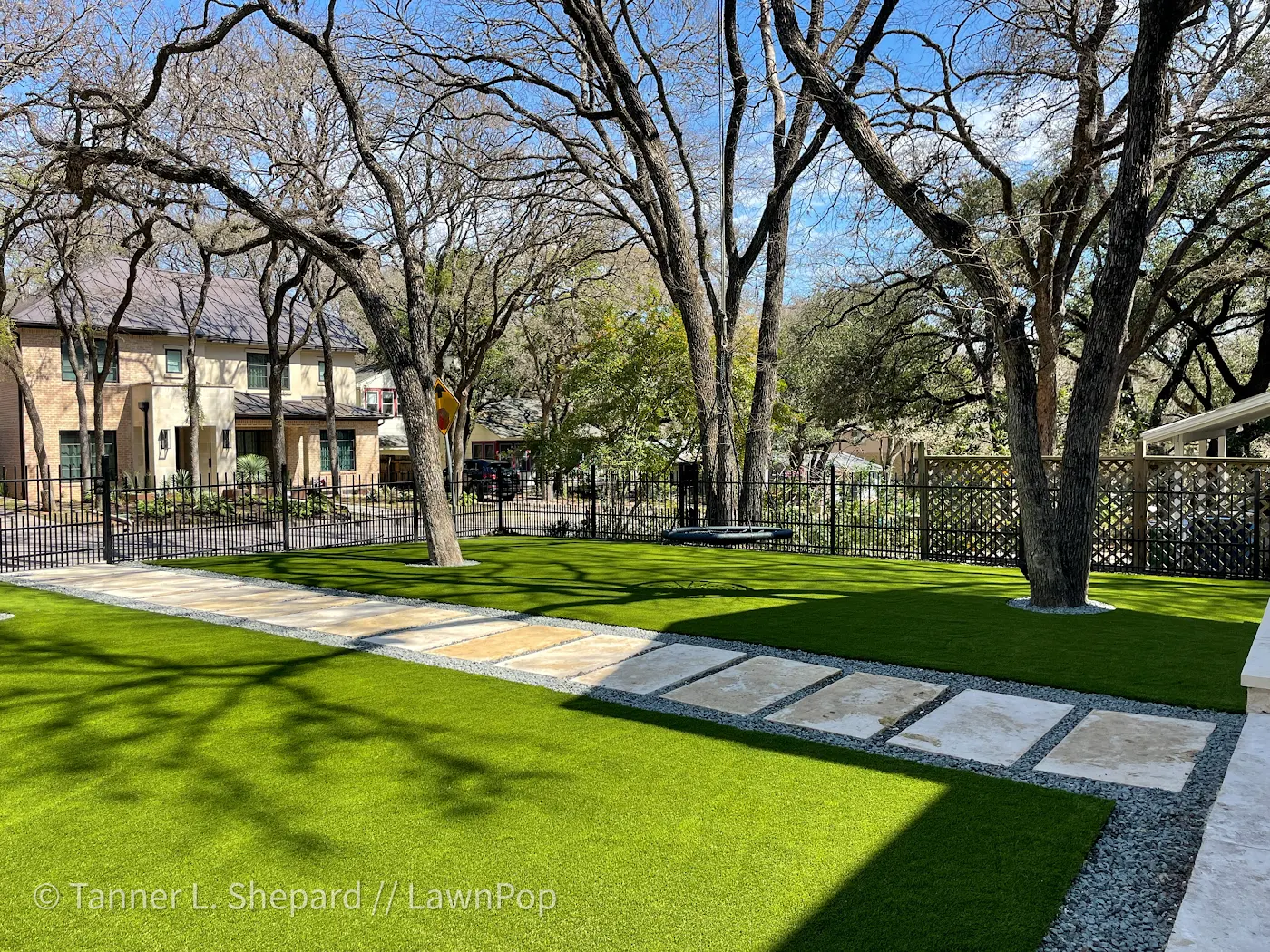
Yes, artificial turf works on a walkway, and the base under the turf decides how the path holds up under daily steps.
LawnPop handles artificial grass installation for paths beside decks, pools, side yards, and gates in Round Rock, Lakeway, Dripping Springs, and the rest of Central Texas. A path follows the same rules as a full lawn, plus a few that matter more on a narrow strip.
A compacted base keeps a turf path from sinking under foot traffic
A walkway puts every step in the same line, so the ground under it takes more pressure than the rest of a lawn. Soft spots show up fast. Installers level and compact the area before any turf goes down, and a path that crosses loose soil, old roots, or a layer of river rock gets that work first because a small dip under one step tends to spread along the whole route. Our guide to preparing the ground before laying artificial grass walks through the steps.
Limestone, clay, and heavy rain decide how a path drains
Turf on a path has to shed water, and Central Texas soil makes drainage a design question. Clay holds water near the surface, and limestone close to the ground in parts of Bee Cave and Lakeway can keep it from soaking in.
A path that runs through a low spot or along a downspout needs a plan for where that water goes before the turf is laid, especially after the kind of heavy rains Austin gets some seasons.
Oak shade and summer sun change how a path wears
Shade does not slow turf the way it slows a natural lawn, so a path under a live oak stays green. Leaves and acorns collect on the surface, and a quick pass with a leaf blower clears them. Direct afternoon sun warms any turf surface, so a path that leads to a pool is worth testing by hand on a July afternoon when you plan the layout.
Clean edges turn a strip of turf into a finished path
Where turf meets pavers, gravel, concrete, or deck boards, the edge has to be anchored so the corners stay flat. Edges set the look.
Homeowners who just built a deck often ask about turf for the walkway around it, and the approach is the same with the edge detail matched to the deck. If your path uses stepping stones or pavers, see how turf between pavers works.
A walkway estimate starts with length, width, and what the path crosses today
Send us the length, the width, and the surface the path crosses now, whether that is grass, dirt, gravel, or river rock. Add who walks it, since a side-yard path used a few times a week and a path to a pool used by kids and dogs put different demands on the base.
Cost follows the size of the path and the site work under it, and the cost of artificial grass page explains those factors without guessing at your yard. The products page lists all eight LawnPop turfs, including Heavy Duty Multi-Play Turf and Southwest Turf, and we help you match one to the path.
Call (512) 298-0933 to talk through your path, or request a free estimate and send us the length and width.
Frequently Asked Questions
Can a turf walkway handle daily foot traffic?
Yes, when the base under it is compacted and the edges are anchored. A walkway sends every step along the same narrow line, so the base matters more here than it does on an open lawn. Tell us how many people and pets use the path when you request an estimate.
Does a turf path drain after heavy rain?
Yes, when the base is built to let water move through and away from the path. Central Texas clay and shallow limestone slow drainage, so low spots and downspouts get a plan before the turf goes down.
Can turf replace a gravel or river rock path?
Yes, in most yards. The rock is removed or leveled and the ground is compacted before turf is laid. Your free estimate confirms what your specific path requires.