



Pavers With Turf in Between: Layouts, Edging, and What to Know Before You Build
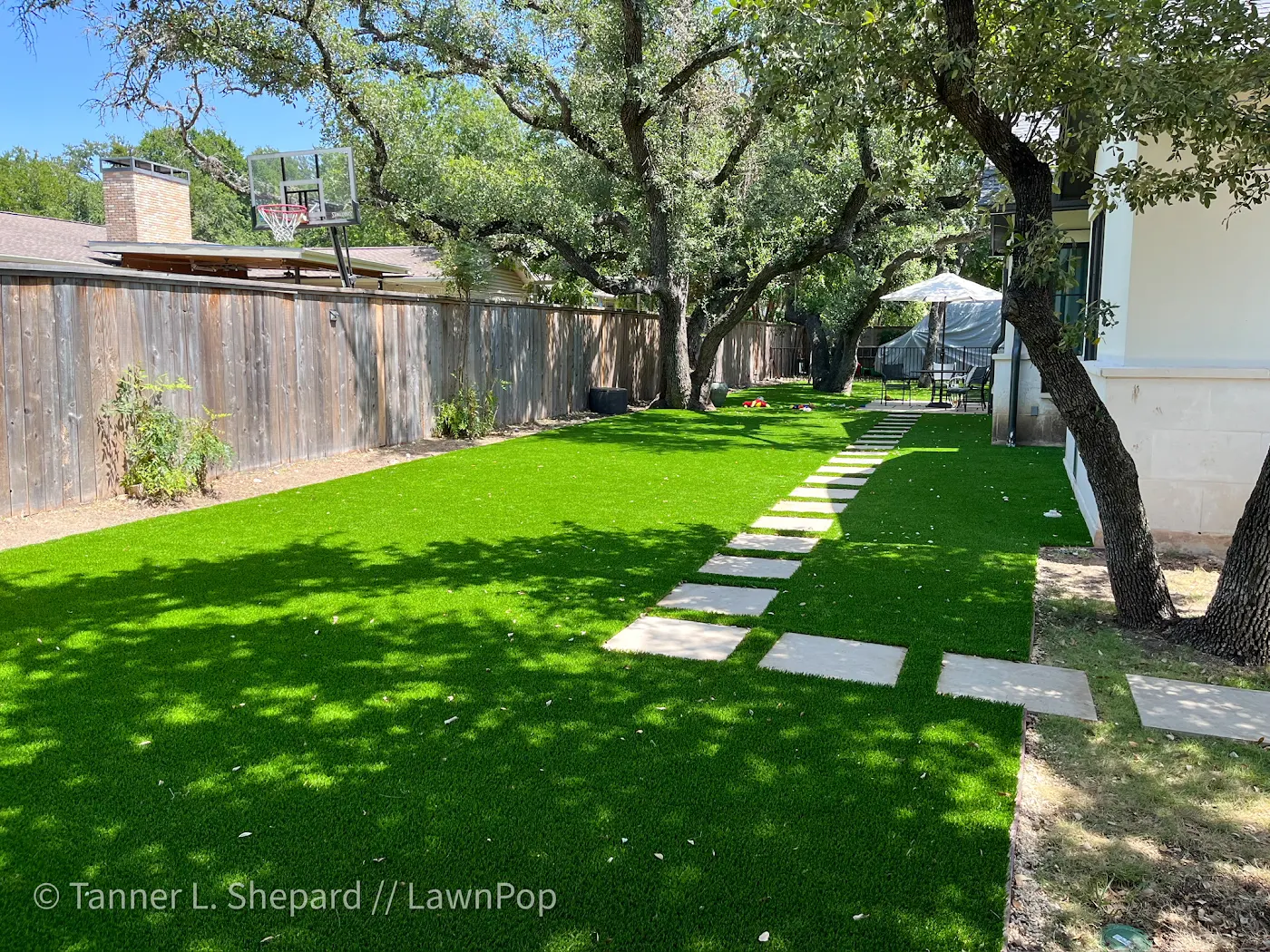
Yes, you can put artificial turf between pavers, and it is one of the cleaner-looking ways to build an Austin backyard. Pavers give you hard, defined walking surfaces. Turf fills the gaps with green that stays green without watering, mowing, or reseeding.
At LawnPop, we supply and install artificial turf across Austin and Central Texas, and paver and turf combinations are a design people ask about often. Here is how the layouts work, what to plan before you start, and what trips people up.
Key Takeaways
- Turf between pavers works in checkerboards, stepping stone paths, long bands, and patio borders.
- The base, paver layout, and turf edges should be planned together, not as separate jobs.
- Texas clay and limestone soil make ground prep and drainage the most important step.
- Turf fills spots where grass between pavers would struggle: shade, foot traffic, and watering restrictions.
- Request a free estimate at /free-estimate/ and we will look at your yard in person.
Four Layouts That Work Well
The phrase “pavers with turf in between” covers a few different designs. Each one suits a different yard and a different goal.
Checkerboard. Square pavers alternate with squares of turf. It reads as modern and intentional, and it works well in a small backyard or a front yard where you want a defined look. It takes careful measuring, because every cut line shows.
Stepping stone path. Pavers are spaced out with turf between them. This is the classic choice for a path from the patio to a gate, a fire pit, or a play area. It softens a hard walkway without losing the solid footing.
Long bands. Wide paver strips run beside strips of turf. This layout makes a yard feel organized and suits long, narrow side yards.
Patio border. A paver patio is framed with turf on one or more sides. The pavers handle the furniture and grill, and the turf gives you a soft surface right outside the door.
If you want more ideas on how turf fits into a yard design, see our post on creative ways to use artificial grass in your landscape design.
Why Texas Yards Suit This Combination
This design solves several problems we hear about from Central Texas homeowners.
Shade. Cedar and oak shade makes it hard to keep natural grass growing between stepping stones. Turf does not depend on sunlight to stay green.
Watering restrictions. A strip of natural grass between pavers is hard to water without soaking the stone around it. Turf needs no irrigation, which fits Austin’s watering rules and water conservation goals.
Foot traffic. The gaps between pavers take a beating from feet, chairs, and dogs. Turf is made for that kind of use.
Edge trimming. Anyone who has trimmed grass along paver edges knows the chore. Turf cuts that work out entirely.
Plan the Base Before You Pick the Pavers
This is where most paver and turf projects go right or wrong. The pavers and the turf both need a firm, level, well-drained base, and they sit on that base together.
Central Texas makes this harder. Clay soil expands and contracts with moisture, and limestone near the surface can complicate digging. A base that is skipped or rushed can lead to settling, uneven surfaces, and pooling water.
Our advice is to settle the full plan first: where the pavers go, where the turf goes, and where water should run. Then prepare the ground once, for both materials. Our post on preparing the ground before laying artificial grass covers the basics.
Getting the Edges Right
The edge is where turf meets paver, and it is the detail people notice most. A good edge looks clean, stays tight, and does not lift.
A few things to settle before work begins:
- Height. The turf surface should sit close to the top of the pavers so people do not trip and water does not pool at the seam. Paver thickness and turf thickness both matter here.
- Gap size. Very narrow gaps are hard to cut and secure cleanly. Very wide gaps need more turf and a different look. Decide the spacing on purpose.
- Straight lines. In a checkerboard or band layout, crooked pavers show up fast. Lay the pavers out with string lines before anything is permanent.
- Anchoring. Turf needs to be secured around every paver so it stays put under foot traffic.
If you want a border or edge along beds and walkways, our post on LawnPop’s Polyboard lawn edging material explains one option.
Picking the Turf
The turf you choose changes how the finished space looks and feels, so look at samples next to your paver color. Warm tan pavers and cool gray pavers can make the same turf look quite different.
LawnPop carries several turf options, including LawnPop Natural Premium Turf, LawnPop Southwest Turf, and LawnPop Evergreen. You can browse them on our products overview. If dogs will use the turf, ask about pet-friendly turf. If the area is part of a bigger yard project, see our artificial grass installation page.
Check Your HOA First
If you live in an HOA community, check the guidelines for hardscape and turf before you commit. Many Austin-area associations have appearance standards for front yards in particular. A paver and turf layout with a clear drawing, and samples to show, is easier to get approved than a vague idea. Our post on HOA approval for artificial grass in Austin can help you prepare.
What to Ask Before You Hire Anyone
Whoever you hire, ask these questions:
- Who prepares the base, and is it done once for both the pavers and the turf?
- How will water drain away from the pavers and the turf?
- How will the turf edges be cut and secured around each paver?
- Which turf options can I see in person next to my pavers?
If the answers are vague, keep looking. The details above are what separate a layout that looks sharp for years from one that needs fixing.
To understand how pricing works in general, read about the cost of artificial grass. Because every paver layout is different, the best way to get real numbers is an estimate on your actual yard.
Ready to Plan Your Paver and Turf Yard?
Call LawnPop at (512) 298-0933 or request a free estimate. We serve Austin and surrounding Central Texas, and we will help you sort out the layout, the base, and the turf that fits your yard.
Frequently Asked Questions
Can you put artificial turf between pavers?
Yes. Turf can fill the spaces between pavers in a checkerboard, a stepping stone path, or long bands. The key is planning the base, the paver layout, and the turf edges together so everything sits level and stays put.
Can you add turf between pavers I already have?
Sometimes. It depends on how the existing pavers were set, how much space is between them, and how the ground drains. The easiest way to find out is a free estimate, where we look at the layout in person.
Is pavers with turf in between a good idea for dogs?
It can work well. Dogs can run and play on the turf sections, and the pavers give you a clean, hard surface for walking. LawnPop also offers pet-friendly turf, so mention your dogs when you request an estimate.
Will an HOA in the Austin area allow pavers with turf?
Rules vary by neighborhood, so check your HOA guidelines and submit your plan before work starts. A tidy paver and turf layout is often easy to present because it looks planned and finished. LawnPop can help you describe what you want to install.
How much does a paver and turf combination cost?
The cost depends on the size of the area, the paver layout, the turf you pick, and the ground preparation your yard needs. We do not quote prices in a blog post. Request a free estimate and we will walk the space with you.
Does turf between pavers need watering or mowing?
No. Artificial turf does not need irrigation or mowing, which is a big reason Central Texas homeowners choose it under watering restrictions. It does benefit from an occasional rinse and brush to keep it looking fresh.