



How to Install Artificial Turf Yourself, Step by Step
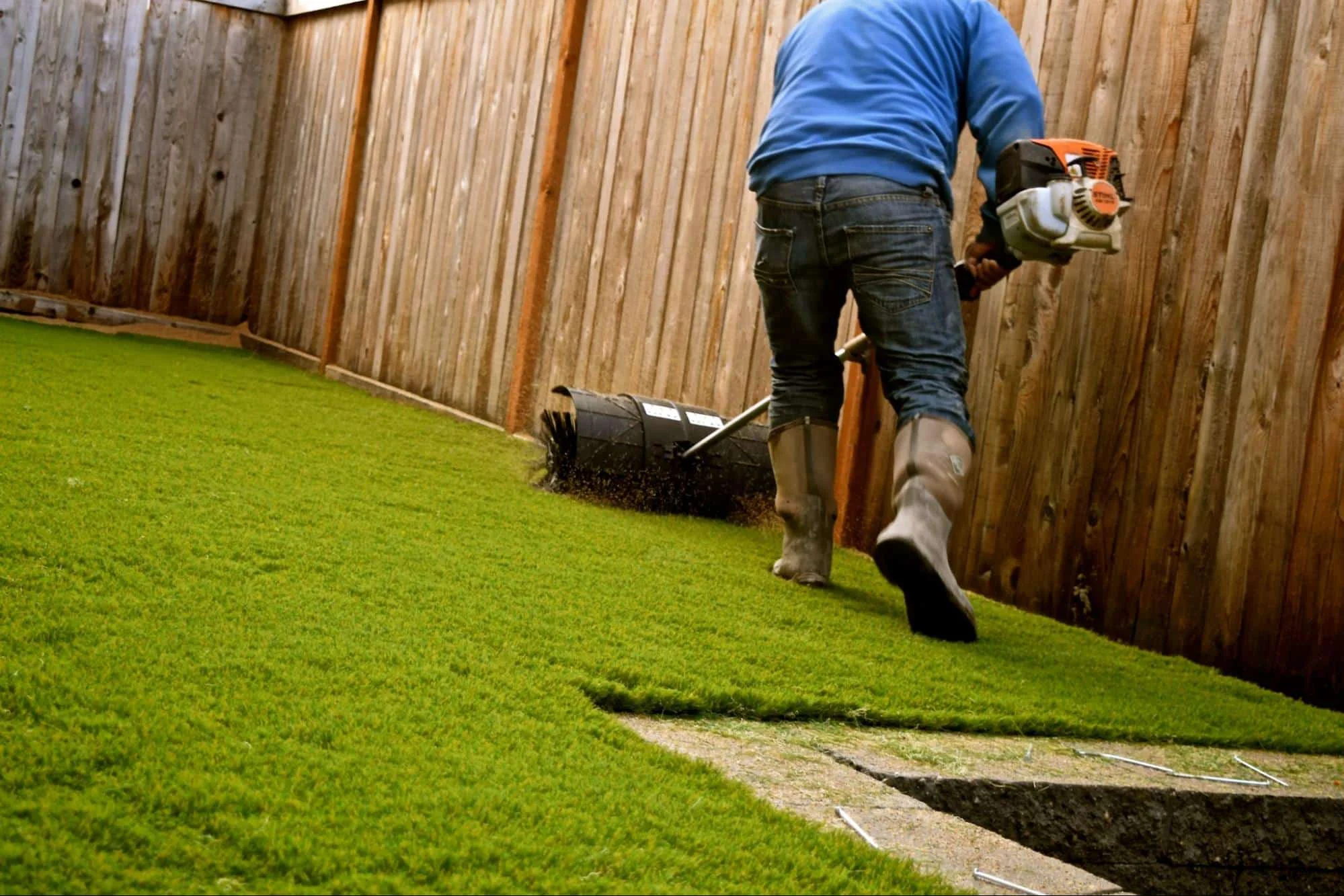
To install artificial turf, you clear the old surface, compact a crushed-stone base, roll out and seam the turf, nail down the edges, and brush in infill. A homeowner with a plate compactor, a sharp utility knife, and patience can do every one of those steps. This guide covers how to install turf in a backyard the way a professional crew handles each stage, so you can decide whether the job fits your yard in Austin or Central Texas.
Key Takeaways
- The base under the turf decides how the lawn looks years later, so most of the work happens before any turf leaves the roll.
- Crushed stone compacted in layers drains heavy Central Texas rains and keeps the surface from dipping.
- Seams, edges, and grain direction are where a rushed install shows its mistakes first.
- Large yards, slopes, concrete slabs, and old river rock beds are the jobs where an installer saves the most trouble.
Measure every curve and order extra turf before you dig
Sketch the yard, then measure each edge, curve, and tree bed so you know the true square footage. Turf comes in fixed roll widths, which means your layout decides where the seams land. Order extra for cuts and mistakes, and read how to calculate artificial turf if your yard has an odd shape.
A pro picks the turf for the use before ordering a single roll. A dog run needs pet-friendly turf with good drainage, and a putting green follows its own product line, so it helps to look through the LawnPop products overview first.
Clear the old lawn, weeds, and river rock down to firm soil
Removing what is there now is the heaviest part of the job. Use a sod cutter or flat shovel to take out grass, roots, rocks, and debris, digging down roughly 2 to 4 inches. Hauling that material away takes more trucks and more trips than most people expect.
Central Texas soil adds its own wrinkles. Limestone chunks and sticky clay both need to be dug out or broken up, and old river rock beds have to be raked out completely so stones do not work up under the turf. A pro also grades the area so water runs away from the house and fills low spots before moving on. Our post on preparing the ground before laying artificial grass goes deeper on this step.
Set the edging and compact the soil before any stone goes down
Edging holds the whole installation in place. Plastic, metal, or wood borders all work, and each one gets anchored along the perimeter so the turf has something solid to nail into.
Once the border is set, run a plate compactor over the exposed soil until it feels firm underfoot. A hand tamper can do it on a small patch. A crew compacts everything twice and watches for soft spots, because a soft spot under the stone becomes a dip in the finished lawn.
Spread two to three inches of crushed stone and compact it in layers
The base is what lets the turf drain and stay flat. Spread crushed stone or decomposed granite in a layer 2 to 3 inches thick, then compact it until it is smooth and level. Add the stone in thinner passes if you can, since thick layers compact unevenly.
A professional checks the surface with a long straightedge and builds in a slight slope so rain moves off the lawn. This matters in Austin, where a hard downpour can wash soil out from under a poorly built base and leave the turf sagging over an eroded hole.
Lay the turf, let it relax, and seam it with the grain running one direction
Roll the turf out and let it sit in the sun for a few hours so the folds flatten. In Texas summer heat the material expands, so a crew often works in the cooler part of the day and trims after the turf has settled.
Cut from the back with a sharp utility knife and a fresh blade. When two pieces meet, join them with seam tape and adhesive, and keep the fibers pointing the same way on both sides. A seam that runs against the grain stands out like a stripe across the lawn.
Nail the edges, spread infill, and power-brush the blades upright
Secure the perimeter with U-shaped turf nails or staples about 6 to 8 inches apart. Then spread infill evenly across the surface. Infill weighs the turf down and holds the blades upright, and the right kind depends on how you use the yard, which our guide to infill for artificial grass explains.
Brush the turf with a stiff broom or power brush to work the infill down and lift the fibers. A pro applies infill in thin passes and brushes between each one, which gives an even surface with no clumps.
Lumpy turf and lifting edges usually trace back to the base
People contact us about turf that is lumpy, with edges coming up, and ask whether it can be pulled up, leveled, and restretched. Sometimes it can. The cause is usually an uneven or poorly compacted base, so the repair means lifting the turf, rebuilding the base underneath, and laying it again.
That is the risk of a first-time install. A mistake in step four does not show until the turf is down, and fixing it costs more time than doing it right once. If you already have turf that needs this kind of help, request a free estimate and we can look at what is going on underneath.
Hire an installer when the yard is big, sloped, or sitting on rock or concrete
Small, flat, simple yards are the best candidates for a weekend project. Bigger jobs are different. A large lawn means moving a lot of stone, and a slope or a covered-in-river-rock yard needs equipment and experience. Installing over a concrete slab or around a raised pool deck means working near surfaces you cannot afford to damage. Putting greens and play areas add base work of their own, which is covered in installing a putting green at home.
LawnPop® supplies and installs turf for homes, pets, play areas, putting greens, sports, and commercial properties across Austin and nearby cities like Round Rock, Cedar Park, Lakeway, Georgetown, and Dripping Springs. Our artificial grass installation team handles the digging, the base, the seams, and the haul-away, so you do not rent a compactor or spend your weekends on a shovel. For a sense of how the investment compares, see the cost of artificial grass.
Call LawnPop at (512) 298-0933 or request a free estimate and we will look at your yard with you.
Frequently Asked Questions
What tools do I need to lay turf in my yard?
You need a sod cutter or flat shovel, a plate compactor, a long straightedge, a sharp utility knife, seam tape and adhesive, turf nails, a spreader for infill, and a stiff broom or power brush. Most of these can be rented. The plate compactor matters most, because a hand tamper rarely packs a base evenly across a whole yard.
Do I need a base under artificial turf?
Yes. A compacted crushed-stone base gives the turf a firm, level surface and lets rain drain through instead of pooling. Turf laid straight over soil tends to dip, hold water, and shift, especially in clay soil that stays wet after a storm.
Can artificial turf be installed over a concrete slab?
Often it can, as long as the slab is sound and water has a place to drain. Slope, drainage holes, and any cushioning layer all affect the result, so have an installer look at the slab before you buy turf.
Does LawnPop install turf or only sell it?
LawnPop supplies and installs artificial turf in Austin and surrounding Central Texas. You can request a free estimate online or call (512) 298-0933 to talk through your project.
Is installing artificial turf yourself cheaper than hiring a pro?
You save on labor, but you still pay for turf, base stone, infill, edging, tool rentals, and hauling away the old lawn. Mistakes can erase the savings, because fixing a lumpy base means lifting the turf and starting over. The cost page and a free estimate give you a real comparison for your yard.